
Medical history & lab evaluation
We review your autoimmune diagnosis, inflammatory markers (CRP, ESR, autoantibodies), organ function, and current medications before designing your protocol.

Physician-led Wharton's jelly MSC and exosome protocols designed to modulate pro-inflammatory cytokines, support macrophage and regulatory T-cell balance, and work alongside your specialist care.
Autoimmune & Inflammatory stem cell treatment program in Istanbul
Overview
Patients with autoimmune and chronic inflammatory conditions often seek regenerative medicine when persistent cytokine activation, tissue inflammation, and systemic fatigue continue despite standard treatment. Our medical team reviews your diagnosis, inflammatory markers, and organ profile to evaluate whether an individualized regenerative protocol is appropriate.
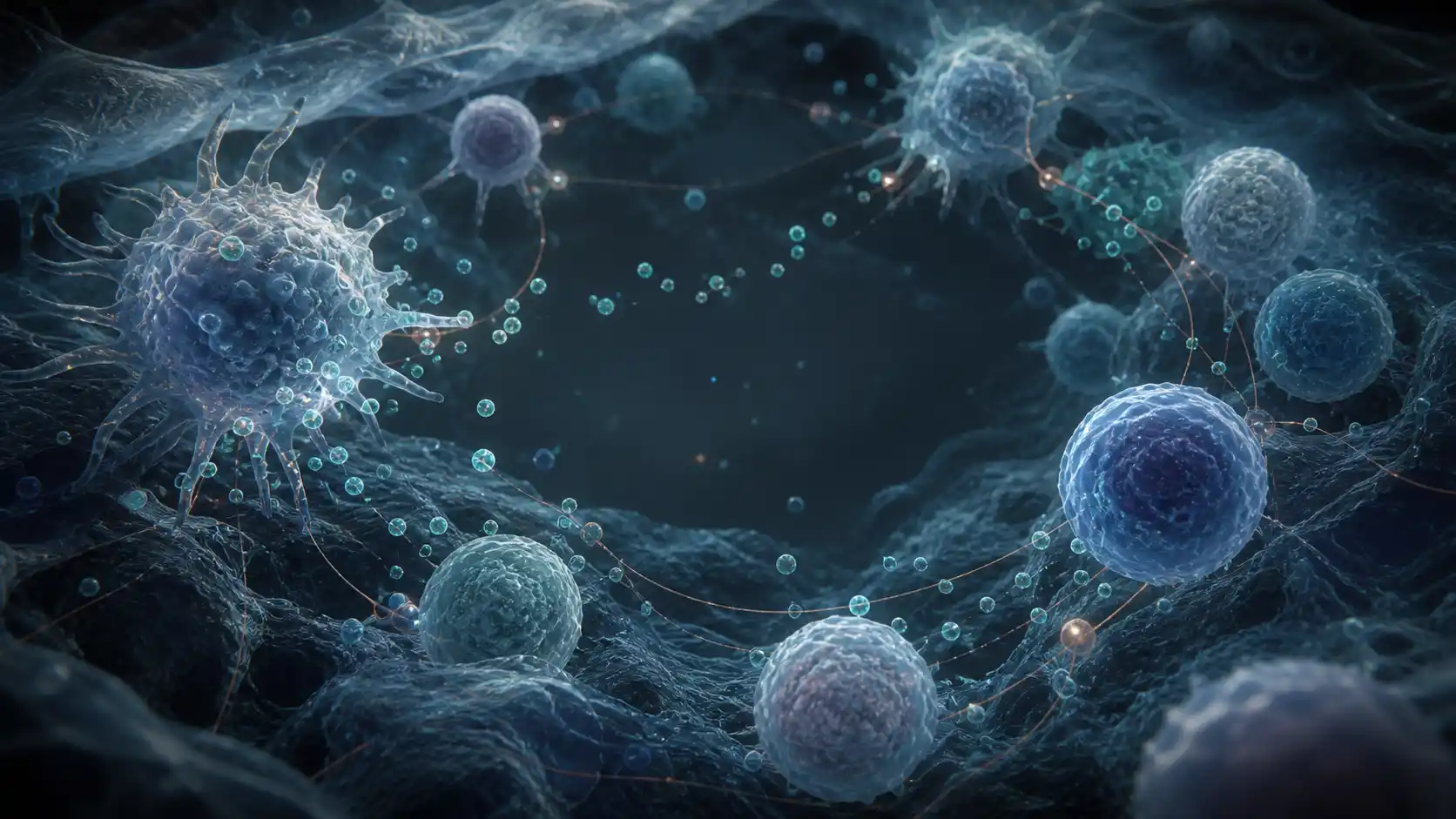
Wharton's jelly-derived mesenchymal stem cells (WJ-MSCs) and WJ-MSC-derived exosomes are investigated for their ability to regulate pro-inflammatory cytokines, shift macrophage polarization from pro-inflammatory M1 toward reparative M2 phenotypes, and support regulatory T-cell (Treg) balance without ablating baseline immunity.
Reviewed by: Uzm. Dr. Cihan Bolat · Reviewed · Re-review due
A journey inside the tissue
Every autoimmune and inflammatory protocol in Istanbul is designed around four steps that connect your laboratory profile to targeted immunomodulatory delivery.
Our clinical methodology
Every autoimmune and inflammatory protocol in Istanbul is designed around four steps that connect your laboratory profile to targeted immunomodulatory delivery.
We review your autoimmune diagnosis, inflammatory markers (CRP, ESR, autoantibodies), organ function, and current medications before designing your protocol.
Fresh Wharton's jelly MSCs and MSC-derived exosomes are selected for their paracrine ability to calm inflammatory signaling and promote M1-to-M2 macrophage and Treg balance.
Protocols combine intravenous WJ-MSC and exosome infusions with intramuscular administration when local tissue retention and sustained paracrine release are desired.
You continue your prescribed specialist medications with your home physician while our team tracks clinical and biomarker progress at 1, 3, and 6-month follow-up.
Conditions we treat & evaluate
Select a condition guide below to explore what happens inside the body, how our WJ-MSC and exosome protocols work, published clinical evidence, and how to request a free medical evaluation.
Systemic IV immunomodulation, intramuscular support, and ultrasound-guided joint protocols.
Individualized Wharton's jelly MSC and exosome protocols for multi-system immune modulation.
Systemic WJ-MSC and exosome protocols targeting mucosal inflammation and immune balance.
Individualized regenerative protocols for Crohn's disease and ulcerative colitis.
Systemic and targeted WJ-MSC and exosome protocols for cutaneous and joint inflammation.
Microvascular and anti-fibrotic WJ-MSC and exosome protocols tailored to your organ profile.
Systemic WJ-MSC, exosome, and cellular bioenergetic support for widespread neuro-immune fatigue.
Immunomodulatory WJ-MSC and exosome protocols for persistent post-infectious inflammation.
Biologics & delivery routes
Based on your medical evaluation, our physicians combine systemic intravenous delivery with intramuscular or targeted administration where clinically appropriate.
Systemic administration of fresh WJ-MSCs designed to regulate pro-inflammatory cytokines (such as TNF-α, IL-6, and IL-17), promote macrophage polarization from pro-inflammatory M1 toward reparative M2 phenotypes, and support regulatory T-cell (Treg) balance.
Systemic delivery of nanoscale extracellular vesicles carrying regulatory microRNAs, growth factors, and signaling proteins that support intercellular communication and tissue homeostasis alongside cell therapy, while noting that whether combined MSC + exosome therapy outperforms single-modality treatment remains under investigation.
In selected protocols, intramuscular administration is included because muscle tissue provides a well-vascularized local microenvironment where cells reside longer and release paracrine signaling factors gradually ('depot effect'), complementing intravenous infusions that initially pass through the pulmonary capillary bed.

Hospital or clinic · monitored
The systemic route for Wharton's jelly-derived MSCs and WJ-MSC exosomes (alongside optional NAD+, multivitamin, and high-dose vitamin C infusions in rejuvenation programs). Investigated for systemic immunomodulation, cytokine balance, M1-to-M2 macrophage polarization, and whole-body paracrine signaling.

Clinic · sustained paracrine depot
Delivers the planned biological preparation into skeletal muscle tissue when local tissue retention and sustained paracrine factor release ('depot effect') are desired alongside or instead of intravenous infusion, where a portion of cells initially passes through the pulmonary microvasculature.
The full route atlas
Eight application routes, planned one case at a time. The routes featured on this page are marked in copper.
Individualized evaluation & clinical transparency
Before recommending any treatment, our medical team evaluates your diagnostic history, inflammatory biomarkers, and current prescriptions, then explains the proposed biologics, administration routes, therapeutic objectives, and itemized costs clearly.
FAQ
Request Free Medical Evaluation
Share your case in confidence. Our international coordinators review every enquiry and respond within 24 hours, in your language.