Reviewed by: Uzm. Dr. Cihan Bolat · Reviewed · Re-review due
What are Wharton's jelly mesenchymal stem cells (WJ-MSCs)?
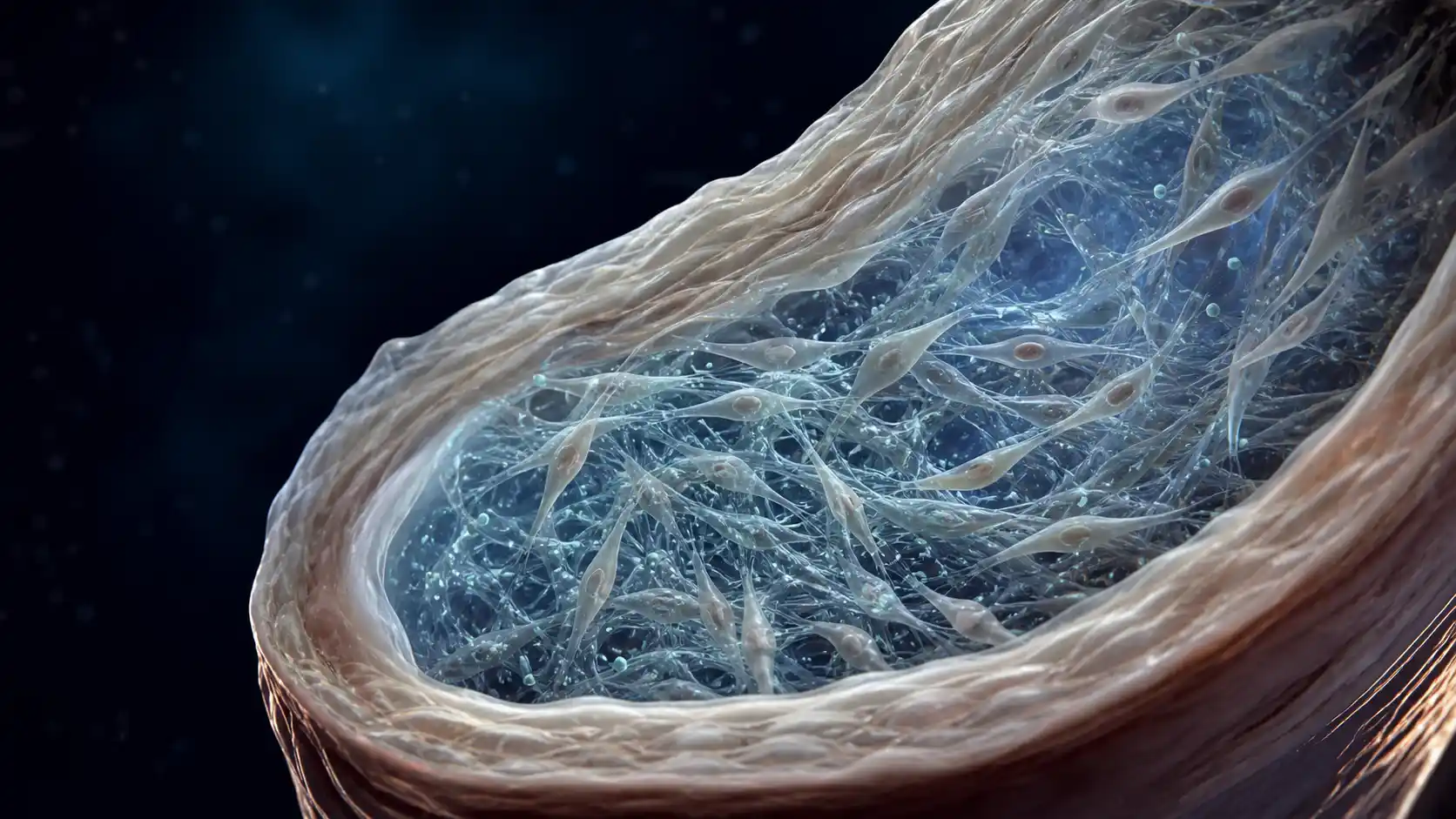
Mesenchymal stem cells (MSCs) are multipotent stromal cells studied across regenerative medicine for their ability to interact dynamically with injured or inflamed tissue microenvironments. In our Istanbul practice, we work exclusively with Wharton's jelly-derived mesenchymal stem cells (WJ-MSCs) isolated from the protective gelatinous connective tissue of ethically donated, screened full-term umbilical cords.
Patients exploring regenerative options for a specific diagnosis often begin here and continue to our treatment programs to see how WJ-MSC and exosome protocols are structured across neurological, orthopedic, autoimmune, and rejuvenation pathways.
Biological rationale: how WJ-MSCs are investigated to work
Rather than acting simply as mechanical replacement parts that automatically turn into new organs, WJ-MSCs are investigated primarily for paracrine signaling and immunomodulation. Once administered, they respond to local inflammatory cues by releasing trophic growth factors, regulatory cytokines, and extracellular vesicles (exosomes) that influence neighboring cells.
In immunological and inflammatory research, WJ-MSC signaling is studied for its potential to regulate excessive pro-inflammatory mediators (such as TNF-alpha, IL-6, and IL-17), encourage macrophages to shift from pro-inflammatory M1 phenotypes toward reparative M2 phenotypes, and support regulatory T-cell (Treg) balance—helping calm overactive inflammatory activity without ablating the patient's entire immune system.

Why we use umbilical cord Wharton's jelly MSCs
Compared with adult autologous sources such as bone marrow or adipose tissue—which require an invasive harvesting procedure and whose cellular potency can decline with patient age or chronic illness—Wharton's jelly stem cells represent a biologically young, non-invasively donated cell population.
In laboratory and translational studies, WJ-MSCs demonstrate strong proliferative capacity, low immunogenicity (favorable HLA profile), and a robust secretome of neurotrophic, angiogenic, and anti-fibrotic signaling factors. All WJ-MSC preparations in our protocols are produced within regulated GMP laboratory facilities in Türkiye with certificate-of-analysis documentation.
Treatment rationale by administration route and clinical domain
Because different conditions involve distinct anatomical barriers and tissue microenvironments, our medical team selects administration routes based on your specific diagnosis, imaging, and medical history across our neurological, orthopedic, autoimmune, and rejuvenation programs, often pairing living cells with WJ-MSC-derived exosomes.
Neurological rationale: intrathecal & intravenous WJ-MSCs
For central nervous system conditions, intrathecal WJ-MSC administration (performed in a qualified hospital with or without sedation depending on clinical circumstances) delivers cells directly into the cerebrospinal fluid (CSF), rather than relying on intravenously infused cells to cross the blood-brain barrier. Researchers investigate this route to support neurotrophic signaling, modulate microglial neuroinflammation, and support the neural microenvironment closer to the brain and spinal cord.
Alongside central delivery, intravenous WJ-MSC administration is frequently included to address systemic immunomodulation and peripheral-to-central inflammatory cross-talk, recognizing that systemic inflammation can influence neurological symptom burden.
Autoimmune & inflammatory rationale: intravenous & intramuscular depot routes
In autoimmune and systemic inflammatory protocols, intravenous WJ-MSC infusions circulate systemically—initially passing through the pulmonary microvasculature ('pulmonary first-pass effect')—where they interact with circulating immune cells and macrophages to support systemic cytokine balance.
Where clinically appropriate, our protocols also incorporate intramuscular administration, which is investigated for local muscular retention and a proposed sustained paracrine release ('depot effect') that may alter local residence time compared with intravenous delivery alone.
Orthopedic rationale: ultrasound-guided intra-articular vs. paraspinal delivery
For degenerative joint and tendon conditions (knee, hip, shoulder, ankle, rotator cuff), we perform ultrasound-guided intra-articular and peritendinous injections so WJ-MSCs and exosomes are placed accurately into the joint capsule or tendon-to-bone enthesis to calm synovial inflammation and support chondrocytes and collagen matrix integrity.
For lower-back and spinal conditions, our protocols utilize paraspinal injections into the paravertebral musculature and facet-adjacent soft tissues—targeting regional spinal inflammation and soft-tissue comfort without claiming that a paraspinal injection mechanically reverses spinal canal stenosis or directly regenerates an intervertebral disc.
Rejuvenation, dermal & scalp rationale
In healthy-aging and aesthetic programs, systemic intravenous WJ-MSCs and exosomes may be combined with NAD+ infusions, multivitamin infusions, and high-dose vitamin C infusions to support cellular bioenergetics and antioxidant defense, alongside selected facial and scalp WJ-MSC and exosome injections targeting dermal fibroblast collagen/elastin signaling, extracellular matrix quality, and hair-follicle dermal papilla support.
Fresh stem cells vs. frozen — and why it matters
A key distinction in this field is between fresh cell preparations and frozen, thawed cell preparations. At Istanbul Stem Cells, we work exclusively with fresh mesenchymal stem cells. Cells are applied within optimal viability windows under physician supervision, in a qualified medical environment.
Frozen products can offer convenience and shelf life, but cryopreservation introduces stress on cells that may reduce viability and alter their signaling behavior. Our clinical philosophy treats freshness as part of quality.
Our six-step clinical evaluation and protocol process
Every patient journey follows a clear, physician-led sequence: (1) you contact us regarding your condition through our free consultation; (2) we request your medical history, diagnosis, specialist reports, and recent imaging or lab results; (3) our medical team evaluates your information; (4) we develop an individualized treatment protocol where clinically appropriate; (5) we explain the proposed biologics, administration routes, intended therapeutic objectives, and itemized costs in writing; and (6) you review the protocol and arrange your treatment stay in Istanbul.
On the ground in Istanbul, your program is coordinated end-to-end with VIP airport transfers, hotel logistics, multilingual interpreters, hospital or clinic supervision, and structured 1, 3, and 6-month follow-up.
What to expect during your medical evaluation
Our evaluation is clinical, not a sales pitch. We review your diagnostic records and explain clearly why specific WJ-MSC or exosome routes are being considered for your case—or let you know candidly if a regenerative protocol is not appropriate.
Safety, hospital environment, and physician oversight
All applications take place under specialist physician supervision in qualified medical settings. Procedures requiring hospital infrastructure—such as intrathecal neurological protocols and our autism program—are performed in licensed hospitals with anesthesiology and intensive-care oversight. Learn more on our About Us page.
Why international patients choose Istanbul
Istanbul combines regulated GMP cellular laboratory infrastructure, accredited hospital partners, and direct flight access across Europe, the UK, the Middle East, and North America—allowing international patients to receive individualized, fresh WJ-MSC protocols at transparent costs.
Explore how WJ-MSCs pair with Exosome Therapy, review our Autism Stem Cell Program, or read more About Us.