Istanbul Stem Cells logo

Exosome Therapy

Exosome Therapy in Istanbul

A precise, physician-planned exosome program for hair loss, joint pain and recovery — hospital-grade preparation, clear dosing, and a fully coordinated stay in Istanbul.

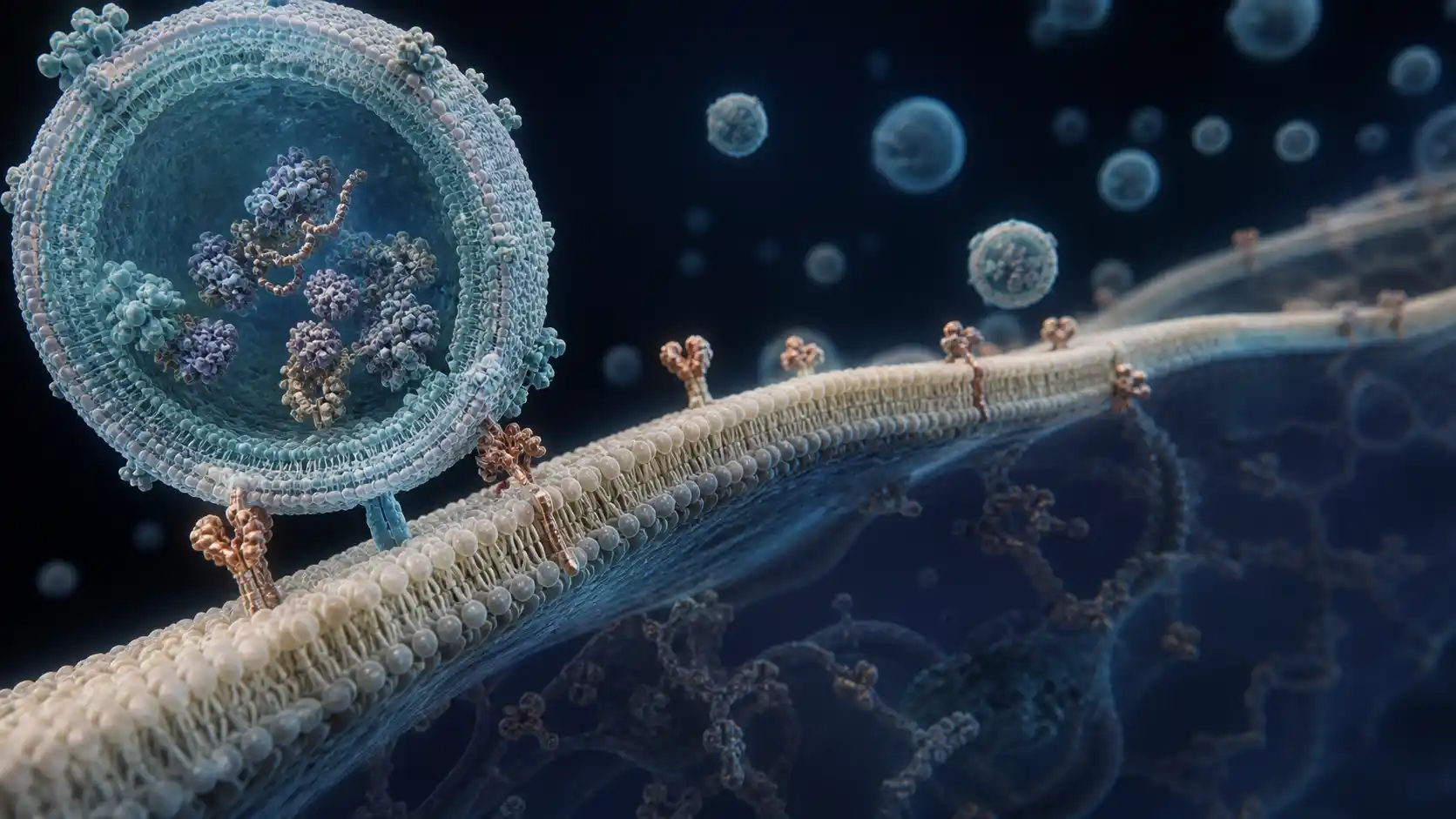
Abstract macro photograph of luminous nanoscale vesicles evoking exosome signaling in regenerative medicine.

Reviewed by: Uzm. Dr. Cihan Bolat · Reviewed · Re-review due

What are Wharton's jelly MSC-derived exosomes?

Exosomes are nanoscale extracellular vesicles (typically 30–150 nanometers) released by living cells as a primary mechanism of intercellular communication. In our Istanbul protocols, we work with Wharton's jelly MSC-derived exosomes—purified signaling vesicles carrying proteins, lipids, growth factors, mRNA, and regulatory microRNAs secreted by young umbilical cord mesenchymal stem cells.

Patients exploring regenerative options often read our exosome therapy guide alongside our mesenchymal stem cell therapy overview to understand how acellular vesicular signaling complements living cell therapy.

Macro photograph of luminous exosome-like vesicles in a clinical liquid medium

Biological rationale: how exosome signaling is investigated to work

Exosomes are not living cells and do not replicate; nor are they 'intelligent navigation systems' that literally tell stem cells where to go. Instead, their scientific rationale lies in extracellular vesicle cargo transfer: when taken up by recipient cells in inflamed or stressed tissue, their molecular cargo—including anti-inflammatory cytokines, trophic factors, and regulatory microRNAs—is studied for influencing gene expression, calming local inflammatory cascades, and supporting extracellular matrix and microvascular homeostasis.

Where exosome therapy is considered in our clinic

Our medical team evaluates exosome strategies across targeted scalp protocols for hair loss and thinning, ultrasound-guided intra-articular and paraspinal orthopedic support, neurological and autoimmune combination protocols, and healthy-aging and facial rejuvenation programs—all integrated within our treatment programs.

Review our treatment programs overview to see how exosome protocols fit into each specialty pathway.

Rationale for combining WJ-MSCs and exosomes across routes

In many complex protocols, Wharton's jelly MSC-derived exosomes are integrated alongside fresh Wharton's jelly MSCs. Researchers investigate this combination because nanoscale vesicles can diffuse rapidly across tissue microenvironments to deliver immediate signaling cargo while living MSCs provide sustained, adaptive paracrine and immunomodulatory support—though whether combined MSC and exosome administration produces superior clinical outcomes compared with single-modality therapy remains under active clinical study.

Neurological rationale: intravenous & intranasal exosomes

In neurological protocols—including those discussed on our treatment programs and autism program pages—intravenous exosomes are used for systemic neuro-immune signaling, while intranasal exosome administration is investigated for non-invasive transport along olfactory and trigeminal neural pathways toward the central nervous system (noting transparently that the exact fraction of intranasally administered material reaching specific human brain regions remains under study).

Orthopedic rationale: ultrasound-guided intra-articular & paraspinal delivery

For joint and tendon conditions, ultrasound-guided intra-articular and peritendinous exosome injections deliver concentrated vesicular signaling directly into the joint capsule or tendon enthesis. For lower-back conditions, paraspinal exosome injections target inflammation in the paravertebral musculature and facet-adjacent soft tissues.

Scalp, facial & systemic longevity rationale

For hair thinning and skin quality, selected scalp and facial exosome injections support perifollicular dermal papilla signaling and dermal fibroblast collagen/elastin maintenance. In systemic rejuvenation programs, intravenous exosomes may be paired with intravenous WJ-MSCs, NAD+ infusions, and multivitamin / high-dose vitamin C infusions.

Our six-step clinical evaluation and Istanbul experience

Every patient follows our straightforward six-step clinical process: (1) you contact us regarding your condition; (2) we request your medical history, diagnosis, and relevant reports or photos/imaging; (3) our medical team evaluates your records; (4) we design an individualized protocol where clinically appropriate; (5) we explain the proposed biologics, routes, intended therapeutic objectives, and itemized costs; and (6) you arrange your coordinated stay in Istanbul.

Learn more about our medical leadership and hospital standards on our About Us page.

How exosome administration is performed

Depending on your individualized protocol, WJ-MSC exosomes are administered via intravenous infusion, non-invasive intranasal application, ultrasound-guided intra-articular or peritendinous injection, paraspinal injection, or targeted intradermal facial and perifollicular scalp micro-injections—always in a qualified hospital or clinical setting under physician supervision.

Timeline, follow-up, and transparent pricing

Response timelines depend on the tissue environment and indication, which is why every program includes structured follow-up at 1, 3, and 6 months. Standalone exosome protocols typically range from $3,500 to $9,000 depending on routes and session count, and every patient receives a clear, itemized written proposal after medical evaluation.

Next steps: request your personalized medical evaluation

Ready to learn whether a standalone or combined WJ-MSC exosome protocol is appropriate for your condition? Start with a confidential free consultation, or explore our mesenchymal stem cell therapy and About Us pages.
Extracellular vesicle biology

Molecular cargo & intercellular signaling

Wharton's jelly MSC-derived exosomes are nanoscale extracellular vesicles (30–150 nm) carrying regulatory microRNAs, growth factors, cytokines, and lipids studied for influencing recipient-cell gene expression, calming inflammatory pathways, and supporting tissue microenvironments.

Adult intravenous administration monitored by a clinician in a private hospital suite
Editorial clinical visualization

Hospital or clinic · monitored

Intravenous WJ-MSC & exosome infusion

The systemic route for Wharton's jelly-derived MSCs and WJ-MSC exosomes (alongside optional NAD+, multivitamin, and high-dose vitamin C infusions in rejuvenation programs). Investigated for systemic immunomodulation, cytokine balance, M1-to-M2 macrophage polarization, and whole-body paracrine signaling.

  • Neurological
  • Autoimmune & Inflammatory
  • Rejuvenation & Longevity
Clinician positioning an intranasal atomizer for an adult patient
Non-invasive route

Hospital or clinic · non-invasive

Intranasal exosome administration

A gentle, non-invasive nasal application of Wharton's jelly MSC-derived exosomes investigated for transport along olfactory and trigeminal pathways toward central nervous system structures. It is a surface nasal application (never a nerve injection), and the exact fraction reaching specific human brain regions remains under study.

  • Neurological
  • Autism program
Ultrasound-guided planning around an adult knee joint
Ultrasound-guided planning

Clinic · ultrasound-guided

Ultrasound-guided intra-articular injection

Direct joint-space delivery of Wharton's jelly MSCs and WJ-MSC exosomes for knee, hip, shoulder, and ankle conditions. Real-time ultrasound guidance visualizes the joint capsule and needle path to ensure accurate placement into the synovial microenvironment.

  • Knee & hip OA
  • Shoulder & ankle
  • Cartilage & synovium
Ultrasound probe held over an adult patient's shoulder in a private clinic
Imaging-guided placement

Clinic · paraspinal & ultrasound-guided

Paraspinal & targeted tendon/soft-tissue injection

Includes paraspinal WJ-MSC and exosome injections into the paravertebral musculature and facet-adjacent tissues for lower-back and spinal conditions (supporting local inflammatory modulation and soft-tissue comfort rather than mechanically reversing stenosis), as well as ultrasound-guided peritendinous placement for rotator cuff and tendon injuries.

  • Back & spinal support
  • Rotator cuff & tendons
  • Sports injury
Clinician's gloved hands preparing a fine mesotherapy syringe in a premium aesthetic medicine suite
Aesthetic medicine suite

Clinic · targeted dermal

Selected facial WJ-MSC & exosome injections

Targeted intradermal micro-injections of Wharton's jelly MSCs and WJ-MSC exosomes across the face and neck to support dermal fibroblast collagen and elastin signaling, extracellular matrix remodeling, local microcirculation, and overall skin quality.

  • Skin rejuvenation
  • Healthy aging
Clinician parting an adult patient's hair to prepare a scalp application, photographed from behind
Scalp preparation

Clinic · perifollicular scalp

Selected scalp WJ-MSC & exosome injections

Targeted perifollicular scalp injections of Wharton's jelly MSCs and WJ-MSC-derived exosomes designed to support dermal papilla paracrine signaling, perifollicular microcirculation, local inflammatory balance, and hair-follicle cycling.

  • Hair loss & thinning
  • Rejuvenation

The full route atlas

Eight application routes, planned one case at a time. The routes featured on this page are marked in copper.

See the treatment programs
  1. Intrathecal WJ-MSC administrationHospital · with or without sedation
  2. Intravenous WJ-MSC & exosome infusionHospital or clinic · monitored
  3. Intramuscular administrationClinic · sustained paracrine depot
  4. Ultrasound-guided intra-articular injectionClinic · ultrasound-guided
  5. Intranasal exosome administrationHospital or clinic · non-invasive
  6. Selected facial WJ-MSC & exosome injectionsClinic · targeted dermal
  7. Selected scalp WJ-MSC & exosome injectionsClinic · perifollicular scalp
  8. Paraspinal & targeted tendon/soft-tissue injectionClinic · paraspinal & ultrasound-guided

FAQ

Frequently Asked Questions

Exosome therapy is not currently FDA-approved as a drug or biologic product in the United States — the FDA classifies most exosome products as investigational, and US providers offering exosome therapy generally do so outside an approved indication. Regulatory frameworks differ by country: in Türkiye, regenerative procedures including exosome applications are regulated by the Ministry of Health and performed inside qualified, licensed hospital environments under physician supervision. We are transparent about regulatory status with every patient and never represent exosome therapy as FDA-approved.

Request Free Medical Evaluation

Begin a personalized treatment conversation with our medical team.

Share your case in confidence. Our international coordinators review every enquiry and respond within 24 hours, in your language.